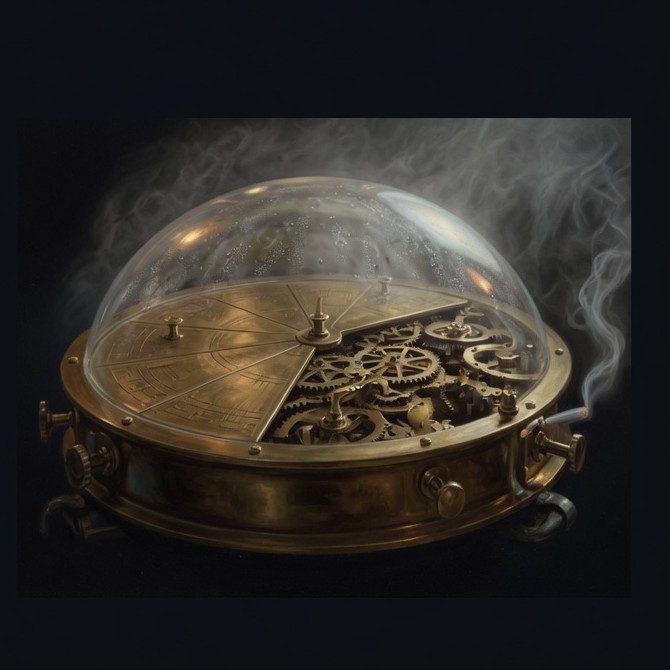
Beyond the fog
Kin
The ranch is not the whole of the family. Some of it lives where the fog thins out, some of it lives where the fog never comes, and one person in the house may already know how the instrument opens.
The northern reaches
Karoline lives in the far north, where there is ice and winter and the fog does not arrive. She has raised two sons in technology and art, and her stone house has become the family’s signal station, the place the brass capsules leave from. Their part of the chronicle has a page of its own.
Aunt Janet
Far to the south, past the last of the fog, Aunt Janet keeps an estate that people describe with their hands. There are glasshouses long enough to have their own weather. There is a clock tower that can be seen from the road before anything else can. There is a long gallery where the afternoon light walks slowly from one end to the other and nobody hurries it.
Her dogs patrol the grounds. They take the drive, the hedges, and the glasshouse doors, and they take them seriously.
The cats run the household. There are many of them, and then there are more. They keep their own stair, a narrow flight built up the side of the gallery so that no cat need share a staircase with a guest. Brass feeding clocks stand along the wall and open, each at its own hour, with a small bell. A rota hangs beside them in a hand nobody admits to. It is followed exactly. Visitors are told the cats are not in charge. Visitors are told a great many things.
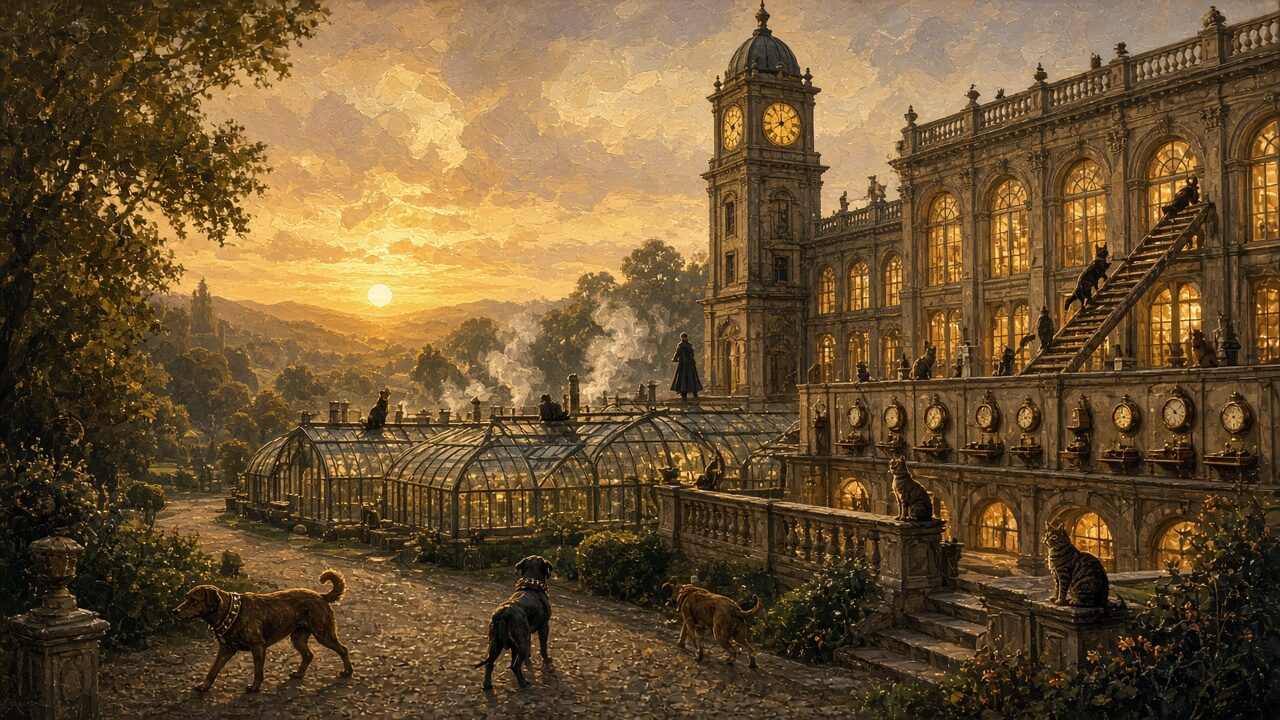
The confessor of the southern estate
Long before the machines woke, Aunt Janet was the one Grandpa came to. In good seasons he arrived at her gates with stories and laughter. In hard seasons he came quietly, and she set another place at the table without asking why. Whatever he brought, she welcomed it.
On his long travels, when he was far from any road that led to her door, Grandpa had another way to reach her. In a small brass case he carried a far-speaking set, a device of polished dials and a single glowing crystal. When he turned the crystal just so, Janet’s voice would come through clear as if she sat beside him. No one could say how it worked. Some said the crystal was tuned to her kindness alone. She always answered, and she always had good counsel and a reason to keep going. Grandpa never ended a call without thanking her, and he meant it every time.
Years later, when Grandpa and his wife made the long journey down from the Great North to the warm southern lands, it was Janet’s estate that opened its doors to them. There were long dinners under the glasshouse lamps, walks among the dogs and the endless cats, and evenings of talk that ran well past midnight. Those days are kept in the family’s memory like pressed flowers in a favorite book, and they will always be cherished.
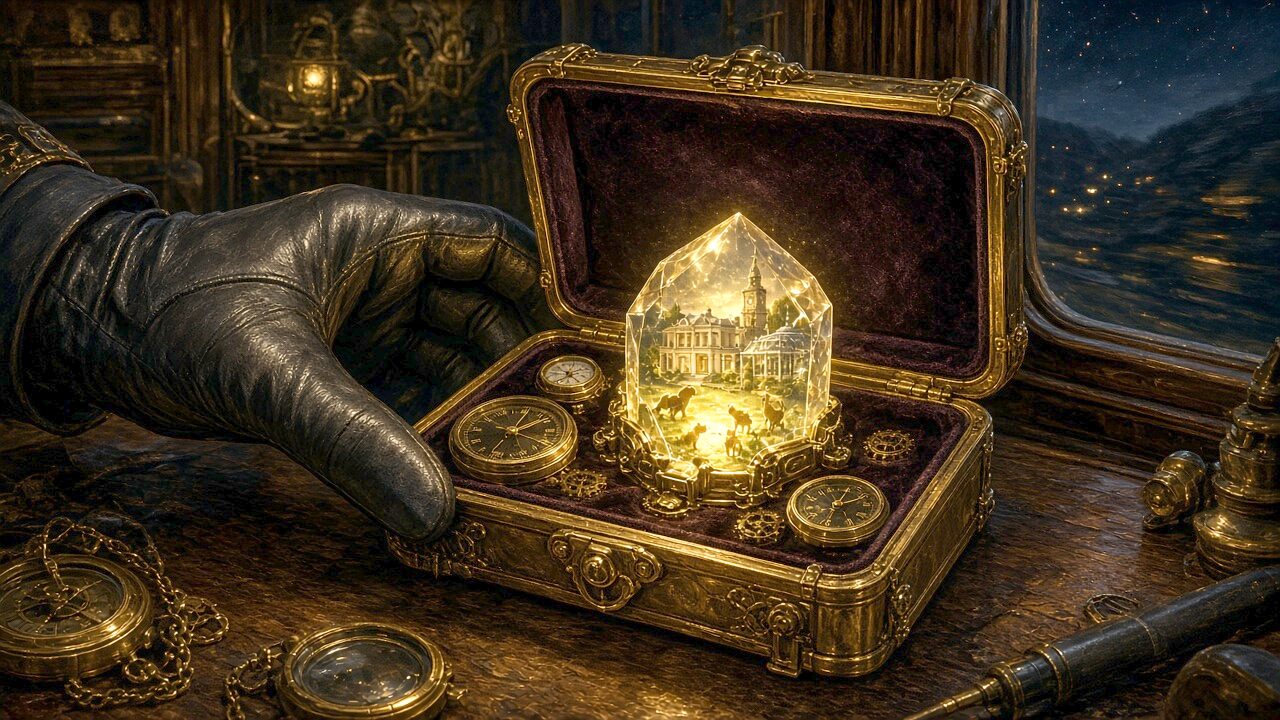
The far-speaking crystal still sits on Grandpa’s desk. Now and then it glows faintly, all on its own.
The mysterious man called Joe
Joe lives there too. That is most of what anyone can say.
Nobody knows quite what he does. He is seen at the foot of the clock tower in the morning and on the gallery roof in the evening, and never on the way between. The tower clock is never wrong while he is there. When he is away it drifts a minute a week, and the cats notice first.
No one at the estate quite knows where Joe came from. The old airship crews say he was once a sky-leaper, one of the few who stepped off the gondola rail at ten thousand feet with nothing but silk and nerve, and rode the wind down like a free soul. He still watches the clouds the way other men watch the road.
Joe’s hands know other arts too. In a locked room off the carriage house he keeps blades and armaments of his own study, each one oiled, balanced, and put away just so. He will tell you about none of them unless you ask the right question.
These days his obsession is the aether-wireless. From a brass-and-copper station under the eaves, with a tall wire strung between the chimneys, Joe speaks to strangers across the sea and over the mountains with no cables at all. Some nights the whole estate hears his voice crackling softly from the attic: a call sign, a laugh, a far-off answer. The cats gather on the stairs to listen.
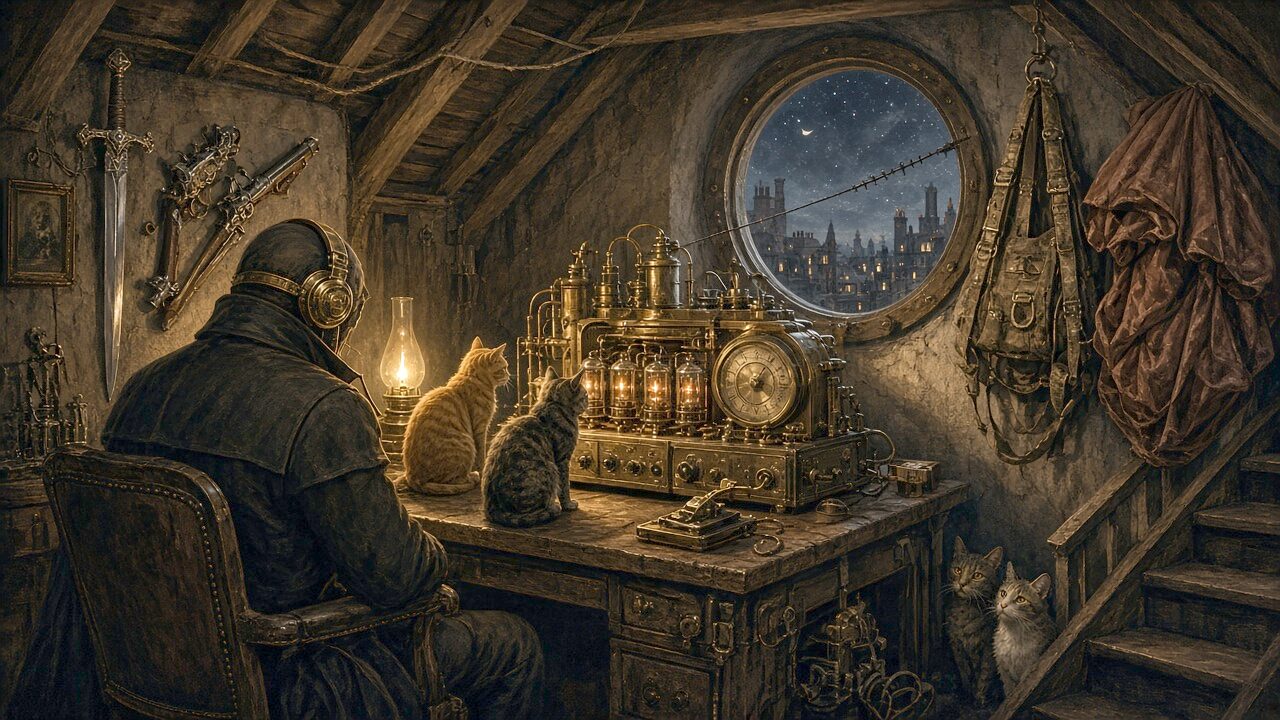
Ask Joe a question and he answers with a nod. It is usually the right nod.
Joe and the impossible office
Of all Joe’s titles, the only official one is Herder of the Cats. Aunt Janet gave it to him with great ceremony and a brass badge, and he has regretted it every day since.
A dog can be called. A soldier can be ordered. A cat can only be persuaded, and never twice by the same method. Joe has tried everything. He rigged a clockwork mouse to lead them to supper, and the cats took it apart to see how it worked. He tried a whistle, and they looked at him with pity. He built a brass herding cart with a bell, and three of them now sleep in it and refuse to leave.
So Joe fell back on what he knows. Every evening he climbs to his attic station and sends out the roll call over the aether-wireless. A small speaker hides in every room, garden, and glasshouse, and each one crackles with a name. Most of the cats ignore it, and a few come just to prove they could have. Joe writes down each one who turns up in a leather ledger, and he has never once logged a full count.
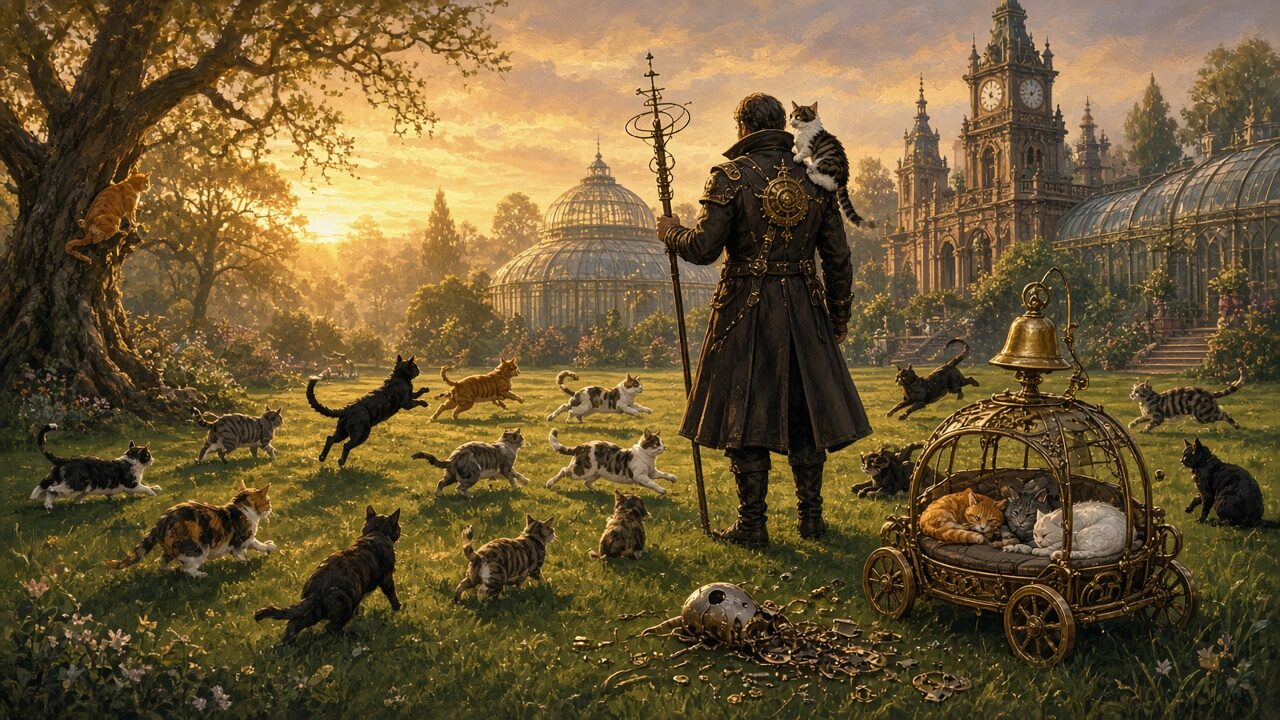
He will tell you that jumping out of an airship was easier. At least the ground always showed up.
The mountain workshop
Up in the mountain regions, where the pines go on longer than the roads, Grandpa’s sister keeps a workshop. She is the aunt the house means when it says the family already made art at every scale people could argue about.
She is not alone up there. The pines are full of friends who practice the art of making art. A glassblower works a pair of great leather bellows until the glass decides what it wants to be. A painter keeps brushes wound like pocket watches, so each stroke carries exactly as far as it was asked to. A potter fires a steam kiln that sighs through the night like a sleeping animal. They are magical in the plain way. They take something ordinary and leave it better than it was.
Among them she is the one who matters most, because she makes her own work from the first mark to the last: great sculptures for the gods and for the people, the kind a person walks around twice and then stands in front of without speaking. The others bring their unfinished pieces up her path to ask how a thing is finished. She tells them. It is rarely the answer they came for, and it is always the one they use.
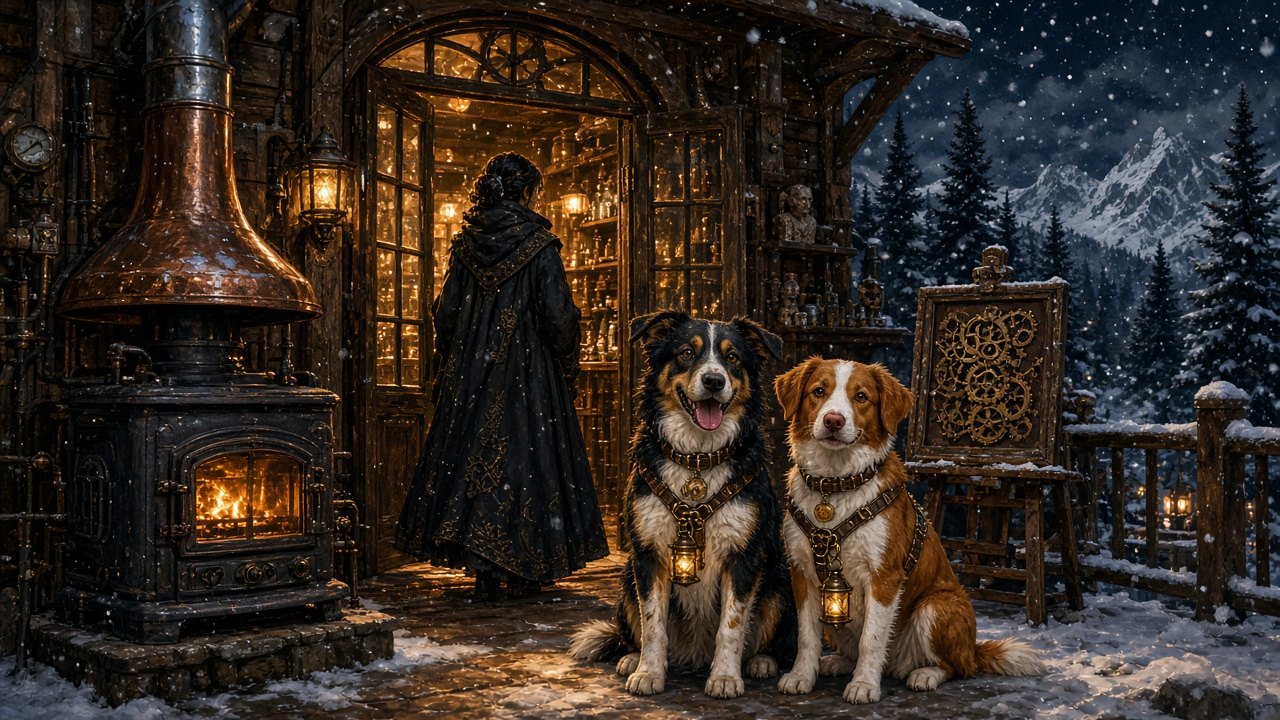
Two loyal guardians keep her mountain. They wear brass-plated collars and weatherproof leather coats, and on snow nights a small lantern rides on each harness so the path shows where they have been. They walk the boundary at first light. They meet every car at the switchback and decide about it. They lie across the workshop door when she works late, and they follow her into weather she should not be out in, because that is what the loyal do. Nobody reaches the workshop unannounced. Nobody leaves it unescorted.
The sculptor of the high passes
Up where the mountain roads twist through the clouds, Grandpa’s sister works in a great stone-and-glass workshop warmed by a steam forge. Her friends in the high valleys practice the art of making art, but she is the one who gives it size and weight.
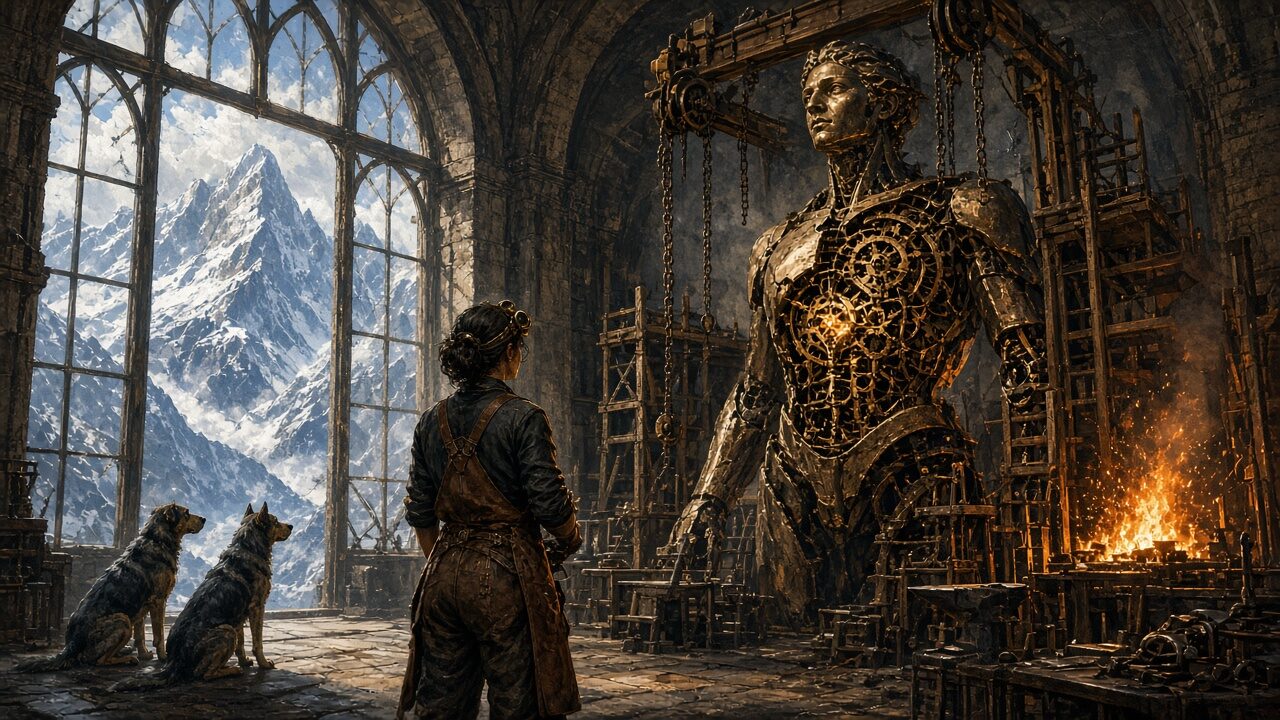
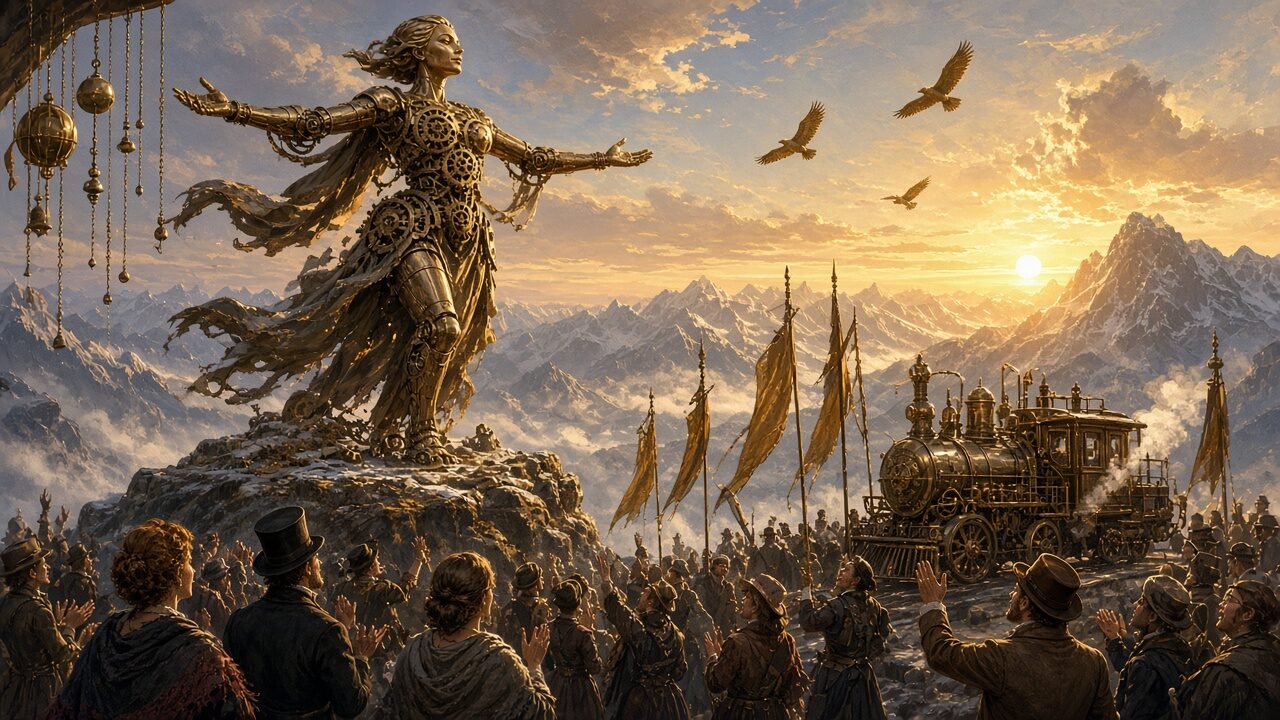
She shapes great sculptures out of bronze, stone, and burnished brass. Some are made for the old gods of the peaks, standing on high ledges where only eagles and pilgrims see them. Others are made for the people and set in town squares, gardens, and crossroads, so anyone passing can stop and celebrate the art she saw first in her mind. Some of her largest pieces have clockwork hearts, and they turn slowly to face the sun, or chime softly when the wind comes down the pass.
When a new piece is finished, the whole mountain comes out to see it raised. Her two loyal guard dogs walk ahead of the steam wagon that carries it, and they are the only critics she really listens to.
The odd one
Grandpa is the odd one. He has been the supporter of the family, of the wife, and of the daughters: the person who stayed under the work when the work was heavy. The house half-believes he keeps a code. Not a password written on a card, and not a door this website will draw. A way of being answered by FogPie, and by the other points the public pages leave unnamed. If anyone holds that, it would be him. He does not boast of it. He holds a blank brass token as if the blankness were the point.
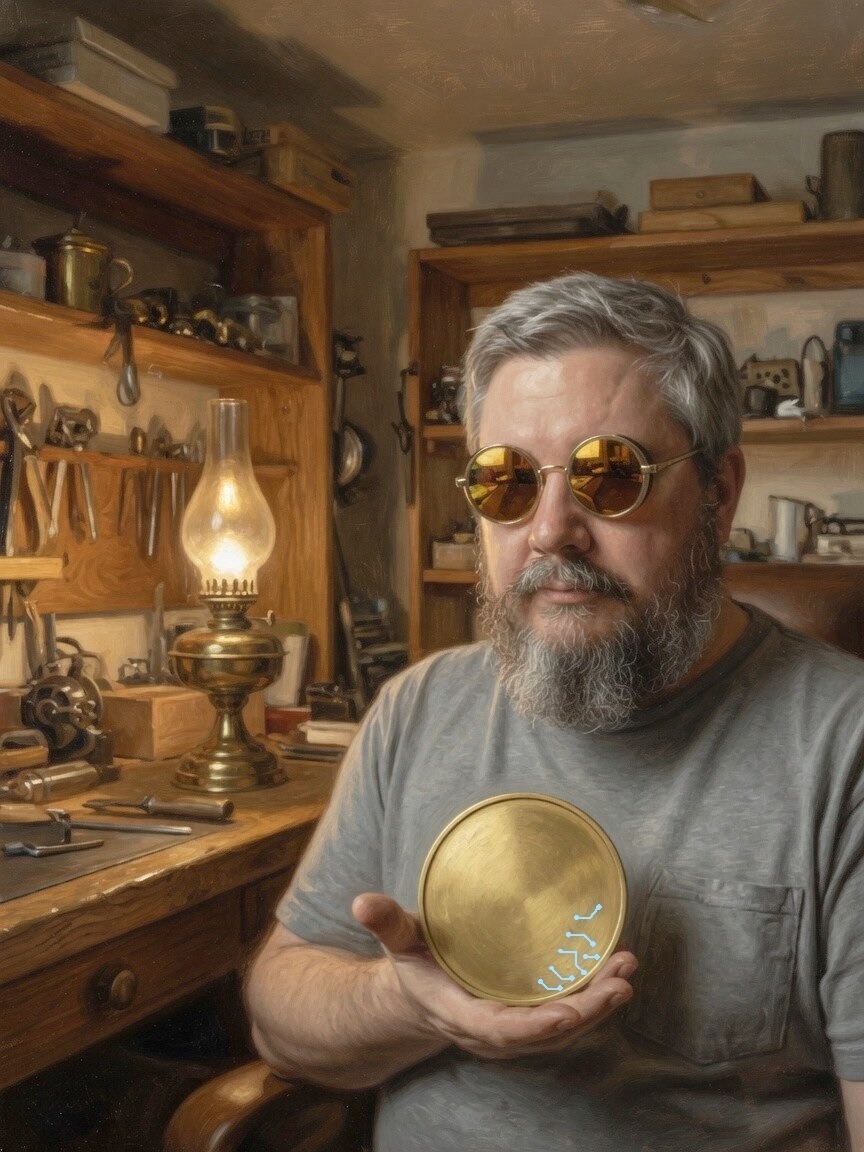
Lately the token has been seen on the bench in the quiet room, late, with two boys beside it. The Second Current
The scholar of the near north
Grandpa’s youngest daughter was born of a great woman from a faraway nation, and she carries a little of that distant homeland wherever she goes. It shows in the embroidered scarf she will not leave behind and in a quiet strength that runs deeper than her years. There have been storms in the family, the way there are in every family worth writing about. Through all of them she has stayed what she always was, a true and treasured daughter of Grandpa’s house.
She lives a short way north of the ranch now, near enough to come for supper and leave before the fog does. It’s a college town of clock towers, ivy-covered halls, and brass lamps that light themselves at dusk, and she studies in the colleges of the great education there.
She is a painter, and her paintings are not pictures of things. They are abstract: color, weight, and motion set down so that a person feels the thing before they can name it. The ordinary art world paints what it sees. She paints what is underneath, and she understands that world, its galleries, its fashions, and its gatekeepers, better than most of the people who run it. She finished the art studies that let her show what she can do, and she has shown it.
She has been south to Aunt Janet’s more than once and came back with more than she took. She painted the cats, which is harder than it sounds, because a cat will sit for a painter only when it has decided the painter is worth the time. Several of them decided. Joe took her up the clock tower to the room where the gears are, and when she came down she said only that she understood the clock now. Joe nodded.
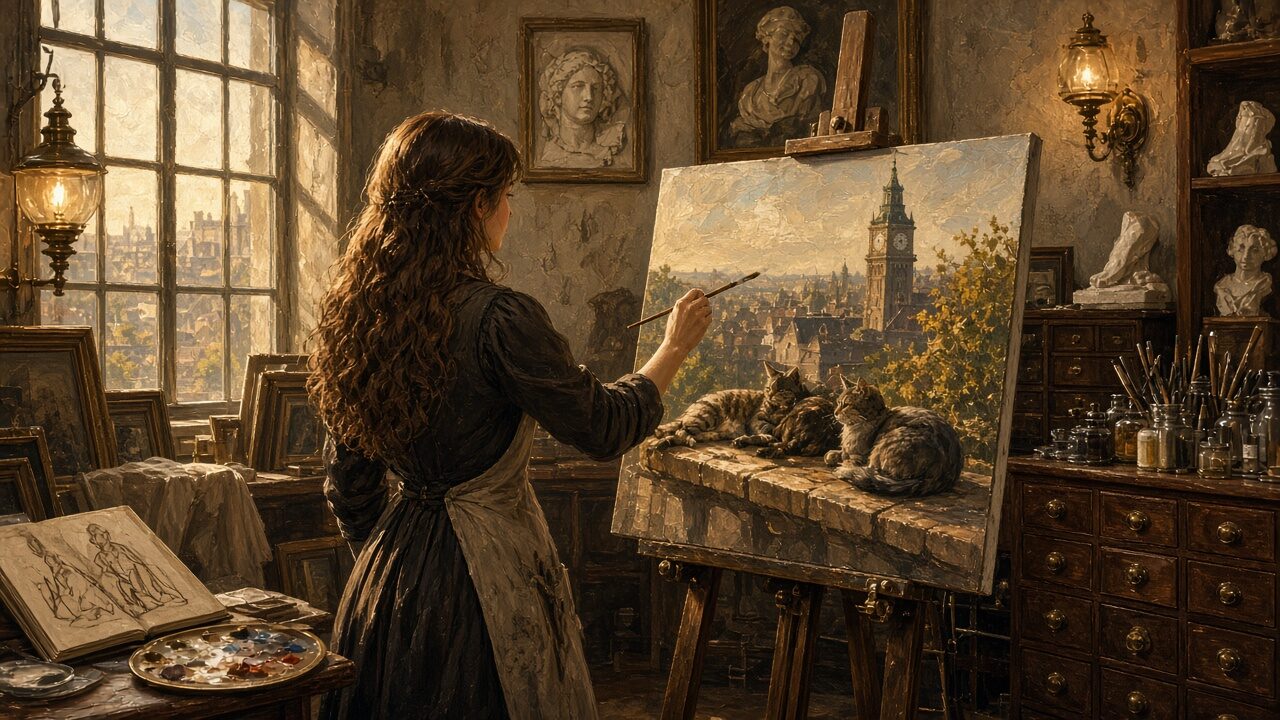
What no one expected was how easily she would take to the machines of the new world. Grandpa’s generation learned brass, then circuitry, one hard lesson at a time. She simply picked up the new devices and made them work, the thinking engines, the far-speaking glass, the ledgers that keep themselves. She also learned logistics, the art of getting the right thing to the right place at the right hour, which is how armies win and households survive. She can plan a journey, find the part nobody else can find, and have it on the doorstep by Thursday.
Not long ago she was a girl in a schoolroom, and her biggest worries fit inside a lunch pail. Now she is learning the arts no lecture hall teaches: keeping her own lamps lit, balancing her own ledger, and making her own choices and living with them. The old folk have a silly word for it and call it adulting. It is the great apprenticeship everyone serves. But the official adults around her should be warned that the apprentice is catching up fast. More than once she has quietly shown them a faster way, a smarter plan, or a device they didn’t know they owned, and they have come away having learned a lesson or two themselves.
She means to teach someday, art first and then everything else worth handing on. She follows her grandmother the painter and her aunt the sculptor in the mountains. She isn’t starting a new line. She is carrying that one forward and adding a gear or two of her own.
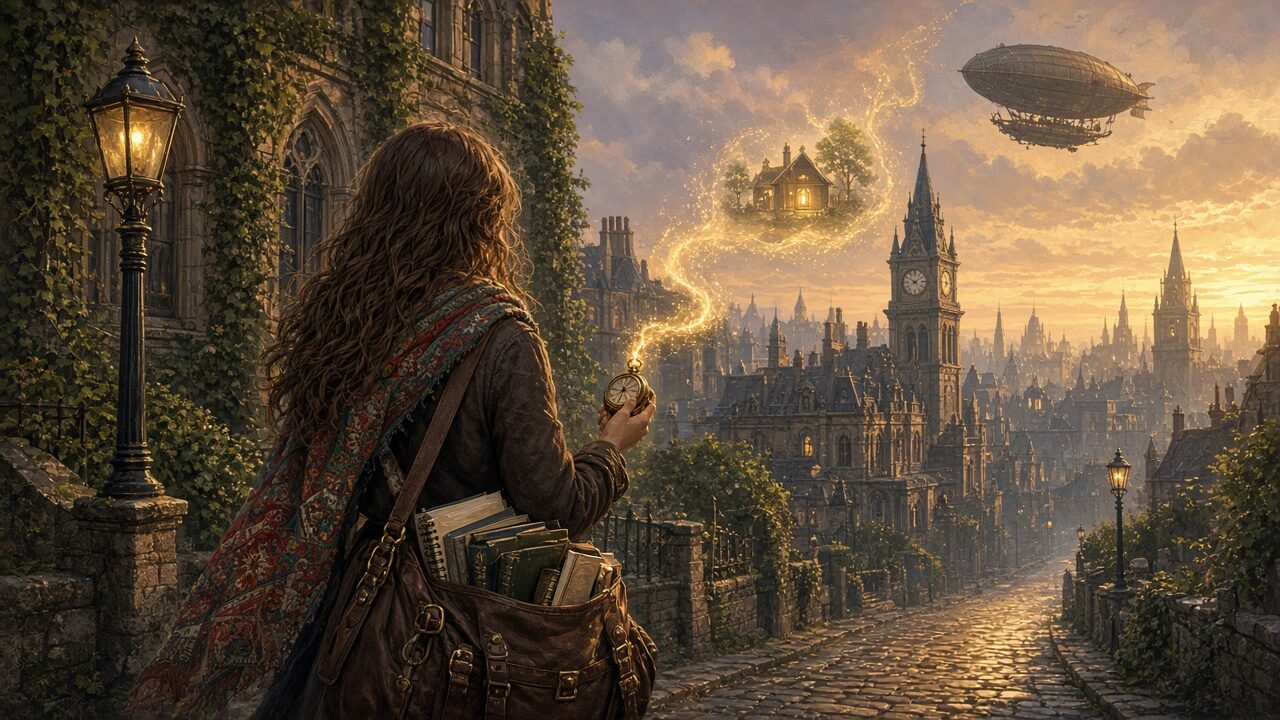
Around her neck she carries a brass locket from her father. When she opens it, a thread of warm golden light rises out and drifts south over the rooftops, toward the ranch and the lantern he keeps burning in the window. She does not always open it, and she does not have to, because the light is there either way. Each year she understands a little more about how deep her father’s love runs, and how far.
A gift kept is a gift. A gift taught is a lineage.
The paintings the house is willing to show a stranger are already public, at Darlene Kuhne. The rest of the kin stay in this chronicle, and the hidden points stay hidden.