Where the fog gathers
The Lucky Hunter’s Ground
(also called Fog Ranch, when the fog is thick enough to deserve a name)
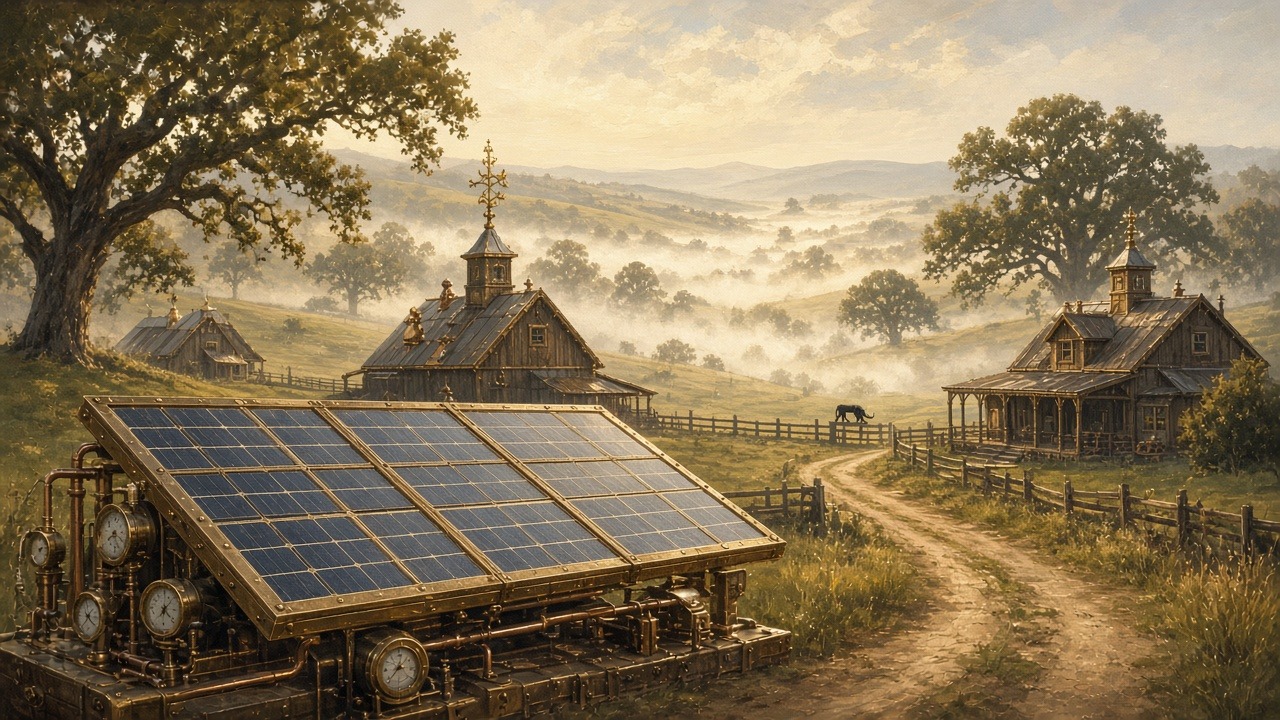
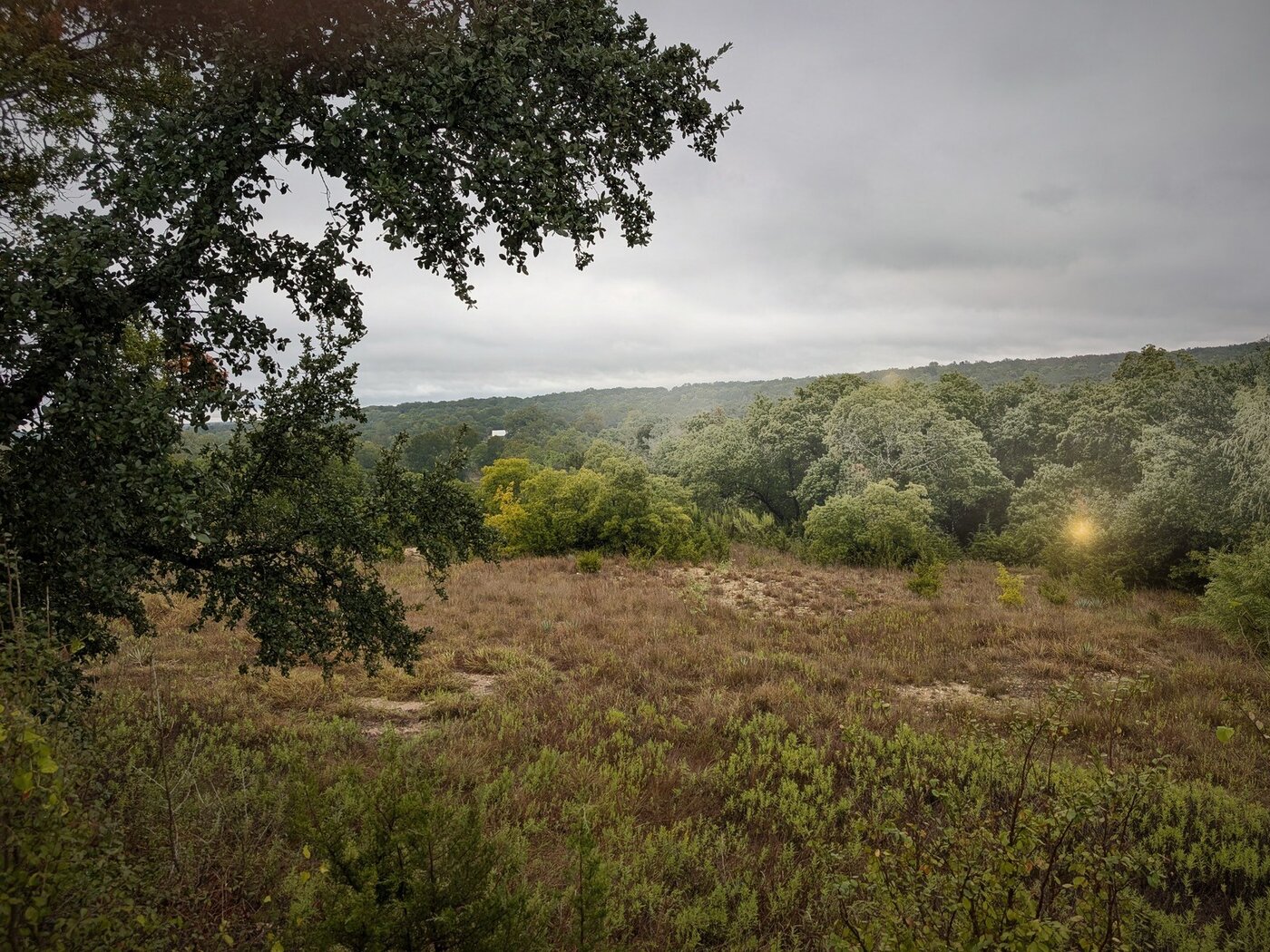
There is a kind of land that keeps weather the way a workshop keeps tools. The fog comes in low under the oaks. It gathers in the draws. It sits on the grass until the sun-harvest array drinks it off the morning. The chronicle will not draw a map to this place. A visitor who needs an address already knows one. Everyone else may know only that the land answers to an old word for lucky hunter — Kanati, in the tongue that named it — and that the house calls the ground the Lucky Hunter’s Ground when it is feeling formal, and Fog Ranch when the fog is in charge.
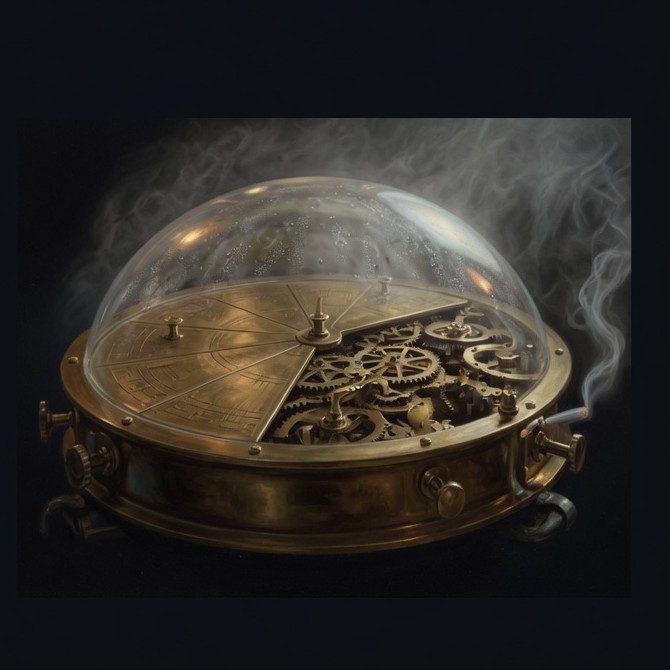
FogPie, the instrument, is the process by which the computers and the machines came together to make a website a stranger can find. The ranch is the land where that fog gathers and the machines live. One without the other is only half a story: a dome with no bench beneath it, or a bench with no public plate.
The secret in the name
The land is called Kanati. The word comes from an ancient people native to this province, the first keepers of these hills and draws. The chronicle does not name that people with modern labels. It only says they were here when the oaks were young, that they knew every water and every wind, and that the hunting which still happens on this ground is always attributed to them. Every platform, every quiet trail, every dawn of patience is laid on their old path. Most visitors say Kanati the way you’d say any ranch name, and they never notice anything more. The few who know say it more quietly, because Kanati is an old word that means lucky hunter. The family’s story holds that the name was never an accident. The land chose it before anyone signed a deed. The luck is not only for hunters in the timber. It also belongs to anyone who comes through the gate carrying something broken and leaves carrying it mended. That is how the odd one found it, and that is why the fog stays.
Forty acres and the fog
Forty acres, more or less, as the fence line tells it, with plenty of hunting land around — enough that a person can walk until the house lamps are only a rumor. Multiple barns stand on the place: some for tools, some for hay that remembers cattle, some for machines that prefer shade to sunshine. Cattle were raised here in the past. The grass still knows the pattern. The pasture remembers weight that is gone.
The fog does not own every hour. It prefers dawn and evening, and nights when the air cools faster than the ground. On those hours the oaks look taller, and the path from house to barn looks shorter than it is. Alex, the General, takes the night. By day the dogs keep the porch. Between them, something older than either keeps the yard.
The sun-harvest array
Ten thousand watts of solar panels lean toward the sky like a field of polished brass leaves. The house calls them the sun-harvest array. They feed the machines under the floor: Mother with her heavy thinking, Big Fluffy with the long memory, Nomad home from a voyage that may or may not have happened, Proteus keeping its old warning. Steam is the language of the wider world. Here, sunlight is the quiet boiler.
On bright days the array hums a little, or the house pretends it does. On foggy mornings the panels wait like patient gears for the weather to choose them. FogPie pauses when the cost of being wrong is high. The array pauses when the sun is shy. Both get back to work without a speech.
The barns
There is never only one barn on a place that has lived through cattle and machines. The barns hold what the house will not: spare pipe, old saddles, crates of parts that might still fit something, a corner where a 3D printer and a lathe have learned to share a wall. One barn smells of hay. Another smells of oil. A third smells of both, which is how you know the ranch is honest about its history.
Visitors are told which door is for people and which is for weather. Weather does not always listen.
The hunt
Around the forty acres runs hunting land enough that the Lucky Hunter’s name is not only a story. Several hunting platforms and stands wait in the timber and along the edges — quiet seats above the fog line, or in it, depending on the hour. At dawn a lantern is sometimes left on a rail, not as a signal anyone admits to, and not as a claim on the deer. Only as a kindness for whoever climbs first.
Colton is master of the hunt here: a very talented organizer of hunts, patient with people and with weather, and trusted to set the day so that nobody’s luck is wasted and nobody’s safety is a joke. The chronicle uses his first name only. The land seems to approve.
The news of Kanati
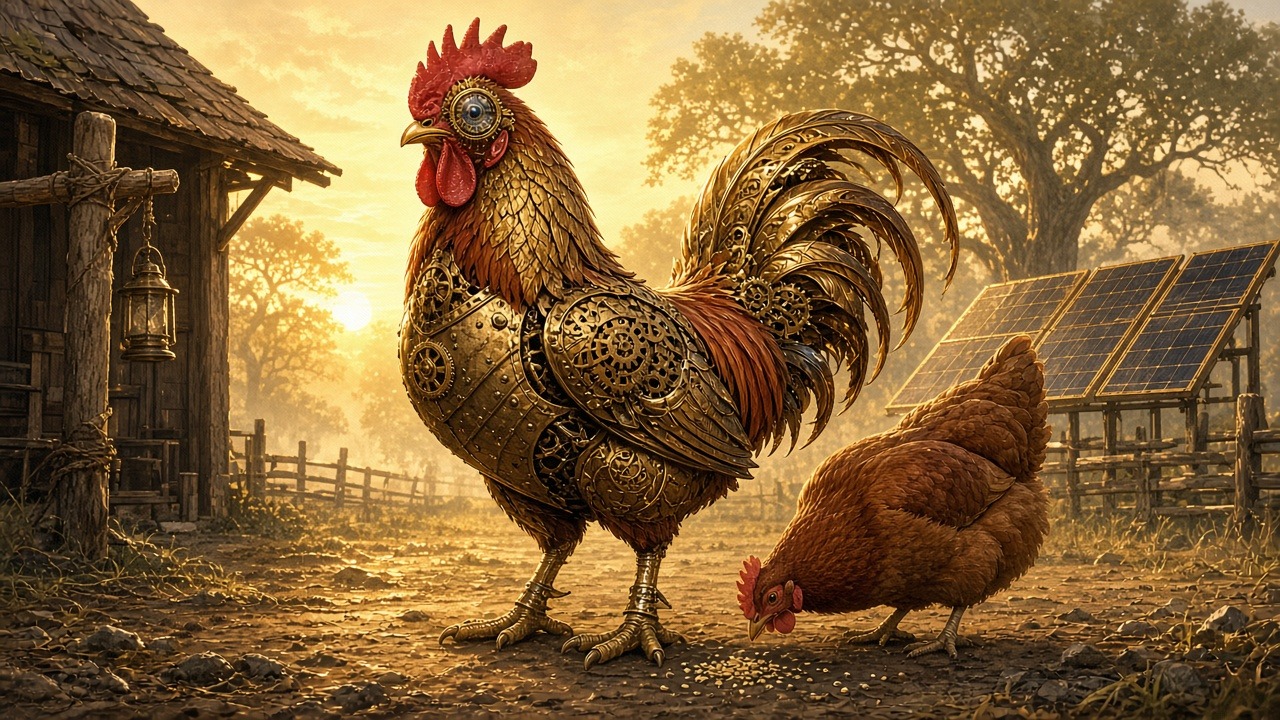
Before the dogs take the day and after the General has reported at sunrise, the yard has its own small government: a rooster and a hen. Their names are still being argued in the kitchen. For now the chronicle calls him simply the rooster, and calls her the hen, who is a plain old chicken and proud of it. Both of them wait for the house to decide.
The rooster is the organizer of the yard. He is its orator, its announcer, and its alarm clock. The ranch runs because he says what is happening. He says it loud, and he says it all day. In the family’s telling he wears tiny clockwork accents, a brass clasp, a riveted tag, a gear no larger than a thumbnail, and a brass crop fitted with a ticker-tape mechanism, because nothing on this land stays entirely ordinary for long.
The raccoons hold a party behind the barns. He announces it. Alex leaves the exact path he walked the night before. He announces that Alex did not. Alex keeps the route after all. He announces that too. The deer come up to snack on a young tree and the greenery by the porch. He announces the deer, the tree, and the greenery, in that order, and then again for anyone who missed it.
He is the newspaper, only louder. He is the editorial staff and the chief of staff. He decides what is news, he decides how it is said, and then he says it. The property listens because it has to.
The cabal
He does not gather the news alone. He keeps a secret cabal, and it is made of animals, not people. Raccoons. Possums. Squirrels. Does and bucks. Birds of all sorts, the ones that sit on the wire and the ones that keep to the oaks. They bring him what they saw, and he gives the news. Kanati has its own news channel. It broadcasts from the fence post.
Beyond the fence line
His ambition is long-range. He wants a wireless, or a radio, or some magic, anything that would carry his crow past the fence: north to the ice, up into the mountains, and south. Most of all he wants to speak with the great Joe of the South. He believes he is better than the early worm, and that the early worm would agree if it were awake.
There has been pushback. Alex the General does not want the night report crowed across three provinces. The society of cats that follow the great Joe does not want it arriving at their door before breakfast. Between the General and the cats, the rooster remains the master of local news only.
Joe says it is lucky roosters have a hard time getting a ham license, otherwise he would hear this one every morning. Joe agrees with the restriction. The cats may have their reasons. Joe’s reason is breakfast.
The ledger
The hen keeps the ledger. She walks the tape as it falls, and wherever the rooster has improved on the facts she pecks a small, neat hole beside the line. The rooster has the news. The hen has the account the house files.
Voices in the fog
The rooster is not the only voice on the ground. Other voices come out of the fog, and nobody has seen whose they are. Whoop-a-woo. Whoop-a-woo. They are not words the Odd One understands. They repeat in patterns, long and short, the same turns coming back in the same order, and patterns like that must mean something. The house has accused the voices of talking to the frogs, or to the birds. They may be talking to the land itself. Whoop-a-woo comes as the sun goes down, when the night comes on and the fog comes with it.
Miasmic inertia
There is a name for what the fog does in that hour. The chronicle calls it miasmic inertia. It is the fog’s refusal to get out of its own way. Miasma is the old word for heavy air that will not clear. Inertia is the habit of staying, of a thing remaining where it is until something moves it. Put together, they are the evening on Kanati, when the mist thickens under the oaks and the land will not move until something louder says what happened.
The rooster is the only one who truly understands it. The others hear whoop-a-woo and guess. He hears the drag. To him the fog is news that has not yet been released, stuck in the draws and held down against the grass. His crow is the push. Until he gives it, the raccoon party, the General’s path, and the deer’s snack all wait in the fog, happened and not yet told. Alex can walk through it. The fog is his cover, and the night is his. Joe is glad it does not travel by radio. Only the rooster knows it is not weather. It is the news, holding still.
The day watch belongs to Bella and Ginger.
The panther of the ground
Alex has been on the place since the day it was bought: a black cat with golden-green eyes by daylight, and by night the steampunk black panther of the ground. Brass goggles. Leather harness. The same round every dark hour. He reports at sunrise. The dogs do not follow him into the oaks. Night is not their country. The chronicle keeps him as he is. The ranch would not be the ranch without him.
After the Banishment
The odd one came home to this land after the Banishment from the Clock Tower.
Above, Lord Tick-Tock had ruled every hour from behind his great brass face. Beside him scurried the Ledger-Keeper, who counted men as parts. The odd one had kept the Foundry Watch beneath the tower — the county’s thinking engines answering to his hands alone — until a grey morning and a scroll ended it. He walked out through the fog with his tools and did not look back.
Here, far from the tower’s chime, he tends his cracked mainspring — the coil in his back that holds a man upright — and mends it slowly, day by day. The ranch is patient with healing. The quiet room is patient with study. He studies the newest machines and the strange talents of the age to come, under the same roof where Mother and her kin already hum. FogPie, which was born of family gears and river fog, grows beside a website now; the website grew from the machines that live in this ground. The process and the place finally share a name a stranger can type.
He never needed to defeat Lord Tick-Tock. He only needed a land where the fog gathers, the sun is harvested, and time belongs to the people who keep the lamps lit.
Kin on the land
The ranch is not lonely when the family remembers the road.
Grandsons come down from the Northern Reaches — ice and winter, signal capsules, brass that is learning circuitry — and the quiet room opens after the house sleeps. A daughter lives just north, near enough for supper and a brass locket’s thread of light drifting south toward the window lantern. A sister keeps the mountain workshop, where sculptures turn to face the sun. Aunt Janet’s world lies further south: glasshouses, cats, a clock that behaves while Joe is near. When they visit, the fog seems to thin for an afternoon, or thicken for a welcome; nobody can agree which, and both are probably true.
The land holds them the way the family gears hold FogPie’s heart: not one piece alone, but every side meshed. Brass from the past. Glass from across the sea. Copper that kept the lamps lit. And a ranch where the lucky hunter’s ground still answers to fog, machines, and the people who come home to it.
What the chronicle will not say
No town. No county. No state. No road number on a public plate. The Lucky Hunter’s Ground is a story about a place, not a pin on a stranger’s map. If you already know the gate, you know it. If you do not, the fog will keep it for you.
FogPie is still learning. The ranch is still gathering weather. The machines are still awake under the floor. That is enough for a page, and enough for a beginning.